
Tipping trailers do heavy, repetitive work. A little regular attention keeps them safe and earning, and catches small problems before they become expensive ones. Here’s a practical checklist for operators and drivers.
Before you tip: on-site safety
Most serious tipping incidents happen during the tip itself, when the raised body makes the trailer top-heavy. Before you raise the body:
- Check the ground. Tip only on firm, level ground. Soft or sloping ground is a leading cause of trailers overturning.
- Look up. Check for overhead power lines, pipework and structures before raising the body.
- Mind the wind. Strong side winds act on a raised body like a sail. Be cautious in windy conditions.
- Unit and trailer in line. Make sure the tractor unit and trailer are straight before tipping.
- Doors and sheet open. Make sure the rear doors are released and the sheet is open before you tip.
- Keep people clear. No one should stand near the trailer, especially at the rear or sides, while tipping.

During the tip
- Watch for hang-ups. If the load sticks in the front of the body, the trailer’s centre of gravity rises sharply. Lower the body rather than shaking or jerking the trailer to free it.
- Watch the trailer, not just the load. If the trailer starts to lean, lower the body straight away.
- Lower fully before moving off. Never drive with the body raised.
Daily walk-round checks
- Tyres: condition, damage and pressures
- Lights, reflectors and markings
- Couplings and air and electrical connections
- Rear doors: hinges, locks and seals
- Sheeting system: operation and condition of the sheet
- Visible oil leaks around the ram and hydraulic lines
- Body: holes, cracks or damage that could let loads escape
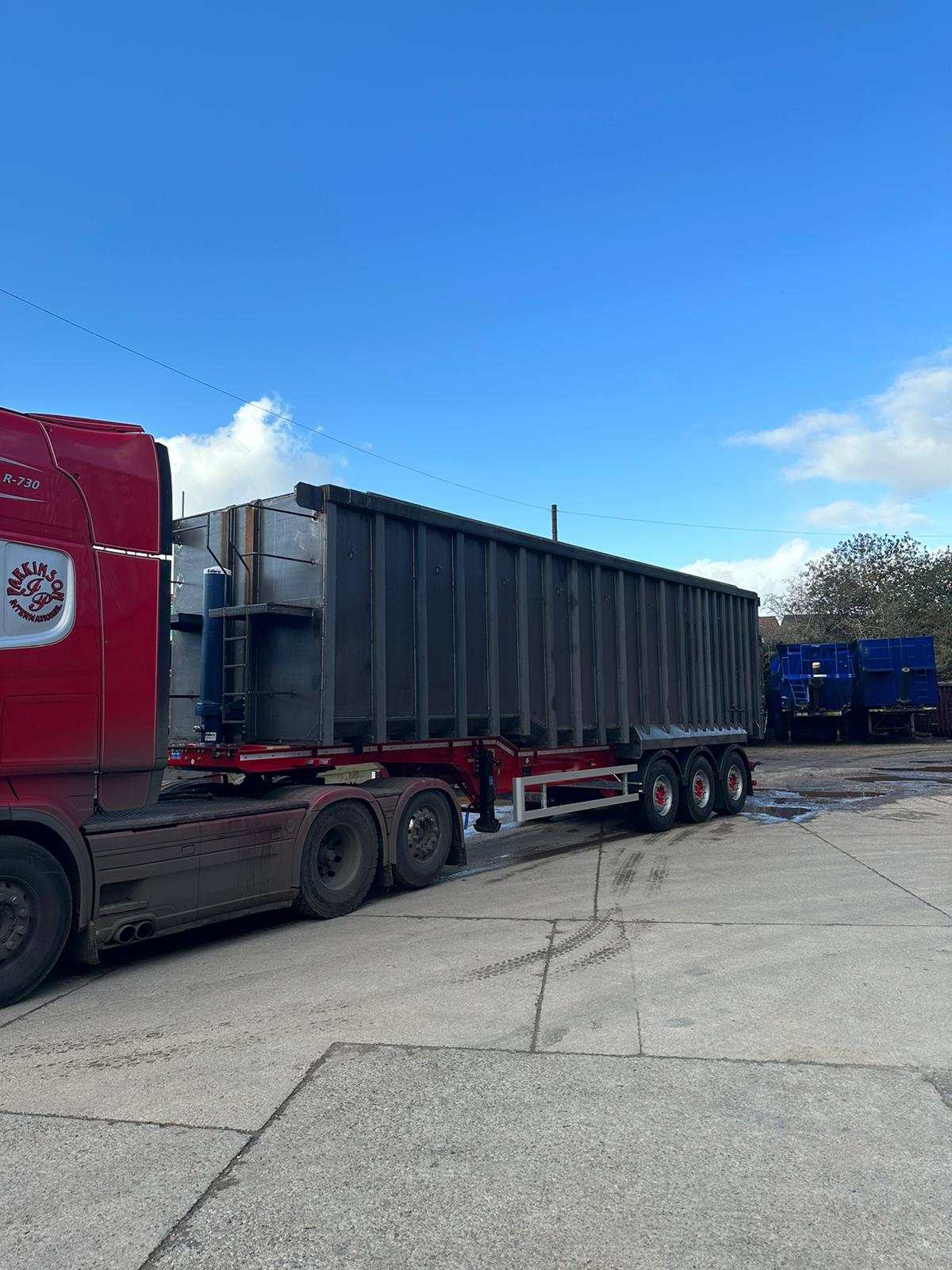
Your tipping ram: warning signs
The tipping ram does the heavy lifting, so look out for:
- Oil leaks around the seals or between the stages
- Slow, jerky or uneven tipping
- The body creeping down under load
- Scoring, pitting or damage on the ram stages
Any of these means the ram needs inspecting. A failing ram is a safety risk as well as a breakdown risk.
Regular workshop maintenance
- Grease pivot points, hinges and the ram mountings regularly.
- Check hydraulic oil level and condition, and the hoses and fittings.
- Inspect the floor and sides for wear, especially on abrasive work.
- Check the weighing system is reading accurately.
- Keep up with your scheduled safety inspections and record them.
When repairs aren’t enough
If your trailer needs more than routine maintenance, such as a worn-through body, a tired ram or tired hydraulics, a refurbishment can bring it back to full working order. If it’s beyond economical repair, take a look at our new and used trailers.
This checklist is general guidance. Always follow your manufacturer’s instructions, your company’s procedures and site rules.
Ram or trailer need attention?
Edbro, Hyva and Binotto rams supplied. Refurbs done in-house.